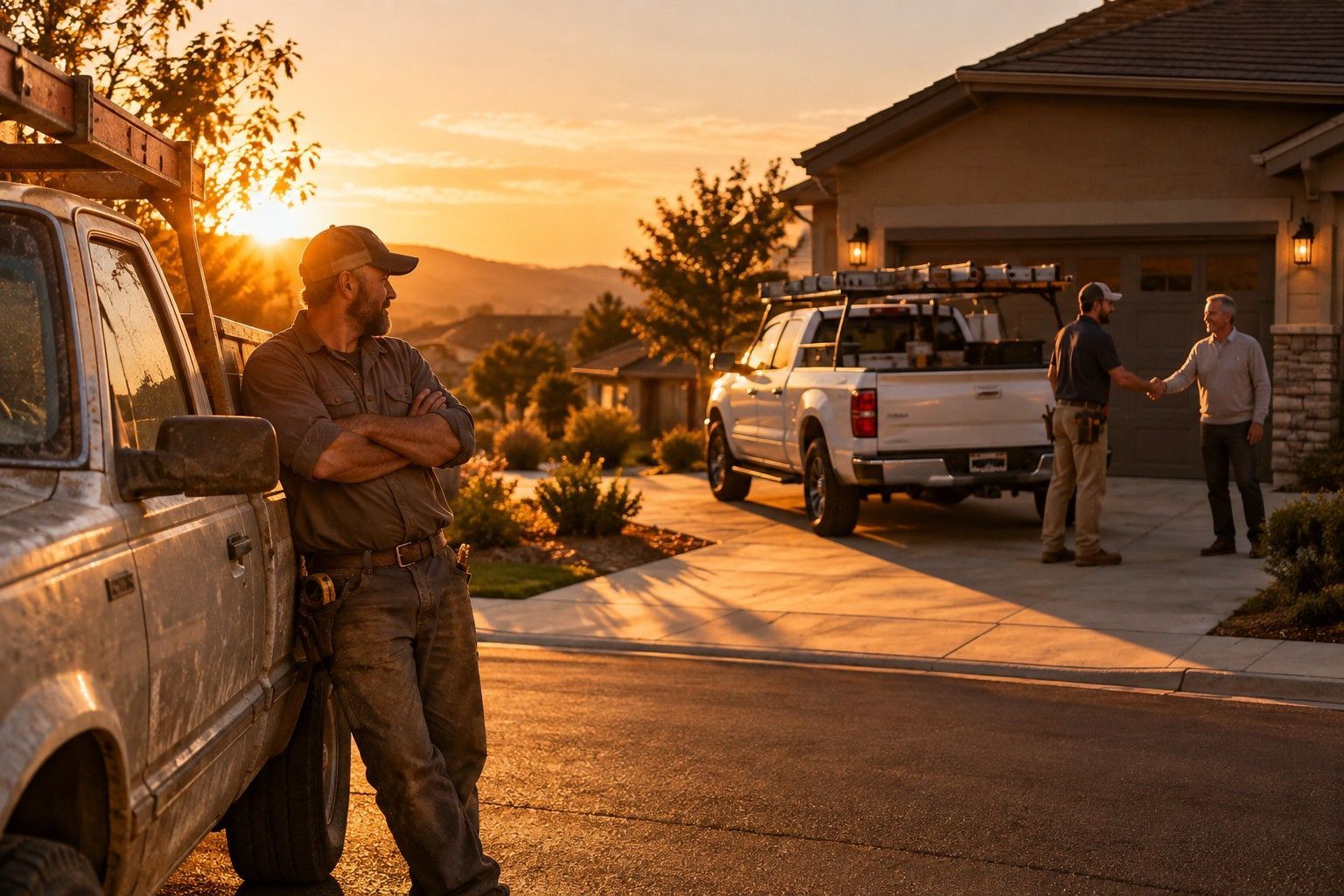
There are two kinds of contractors. One finishes the job, stands in the driveway, and tries to work up the nerve to say "hey, would you mind leaving us a review?" The other one gets paid, drives to the next job, and his system sends the review request for him before he hits the first stop light. Guess whose Google profile is growing.
⚡ QUICK SUMMARY
Manually asking for reviews depends on memory, mood, and nerve, which is why it fails. Smart contractors wire the review request to the moment they get paid : payment comes in, a text goes out, an email follows, and a gentle reminder covers the ones who forgot. Set it up once and it never misses a customer again.
Why Manual Asking Fails Every Time
Manual asking dies for three reasons, and none of them are your fault.
You forget. You are running jobs, quoting work, chasing parts, and answering calls. Remembering to ask every customer for a review is one more ball in the air, and it is always the first one dropped.
It feels awkward. Standing in someone's kitchen asking them to say nice things about you online feels like fishing for compliments. So most contractors only ask when the customer is visibly thrilled, which filters out 80% of perfectly happy customers who would have said yes.
It doesn't scale. Even if you have the memory and the nerve, your techs might not. The moment review collection depends on a human doing an uncomfortable thing consistently, the math breaks.
Reviews are a numbers game, like the drive-thru asking "want fries with that?" They ask everyone, every time, because the ask itself is free and the yeses add up. Your review count is not a measure of your work. It is a measure of how many people got asked.
The System: Get Paid, Fire the Request
The best implementation we know is also the simplest: connect review requests to your payment processor. Every time you get paid, the request fires. That is the whole trigger.
1 Payment lands, text goes out
The text message is the workhorse. People read texts almost instantly, usually within minutes, while emails wait in line behind 40 promotions. The text says thanks, includes the direct review link, and asks for 60 seconds.
2 Email follows the same day
Some customers live in email. The follow-up email carries the same review link, a thank-you, and nothing else. No newsletter pitch, no coupon. One job: the review.
3 A gentle reminder a few days later
Most people who skip the first ask were not saying no. They were driving, cooking, or wrangling kids. One friendly nudge a few days later catches a surprising share of them. One nudge. Then the system lets it go.
Now walk through what this means on a normal week. Contractor runs 10 jobs. Gets paid 10 times. Ten customers get asked, automatically, at the exact moment they are happiest: the job is done and handled. Even a modest yes-rate stacks 15 to 25 new reviews a quarter, every quarter, without anyone saying an awkward word out loud.
Back It Up in the Real World
The automation is the engine, but smart contractors also carry the ask with them:
- A QR code on you. On a card, on the clipboard, saved in your phone so you can text it personally on the spot. Customer says "you guys were great" and you say "that means a lot, this link takes 60 seconds." Moment captured.
- A countertop display. Leave one behind after the job so they can scan it later, or set one at your front counter if customers come to you. It asks so you don't have to.
- The invoice line. One sentence with the review link: "Would you please leave us a review on Google? It means a lot."
Each layer catches people the other layers missed. And together they send a message the customer notices: this company cares what you think. That impression alone makes people more likely to leave the review. We covered the full playbook, including the new Google rules about what you can and cannot ask, in our guide to getting more Google reviews.
Why This Matters More Than Ever
Reviews were always trust. Now they are visibility. Review count and review velocity feed directly into who shows up first on Google Maps, and a stalled profile is one of the first things we check when a business disappears from local search. AI assistants pull from the same well: when someone asks ChatGPT or Google for a good plumber nearby, businesses with deep, recent reviews get recommended, and thin profiles get skipped.
The contractor who automated his review ask two years ago now has a moat. Every review is another brick a competitor has to match the slow way. That compounding is why review automation is one of the first things we wire up in local SEO work for growing businesses.
Ideally your CRM does all of this out of the box: payment triggers, texts, emails, reminders, review tracking. That is exactly how the SpeedMobi Single Point System works. But even without it, you can wire this together with the tools you have. The system matters more than the software.
The Bottom Line
Manually asking for reviews is dead because it was never really alive. It depended on memory and nerve, and both run out by Thursday. The fix is one decision: connect the ask to the payment, back it up with a text, an email, and one gentle reminder, and keep a QR code within reach for the moments worth catching. You did the work. You earned the review. Let the system go get it.
| How Many Reviews Did You Miss This Month? Every paid job without an automatic ask is a review you earned and never collected. See what your reputation looks like next to your competitors'.
|
Written for contractors, not marketers. What is working in local search and AI right now, in five minutes. No fluff, no spam, unsubscribe anytime.
Connects to QuickBooks Online in one click. Your competitors ask 100% of customers for reviews automatically. Now you can too.
See How It WorksTake the free assessment and get a full report on where your marketing stands and what to fix first.
Start My Free Assessment