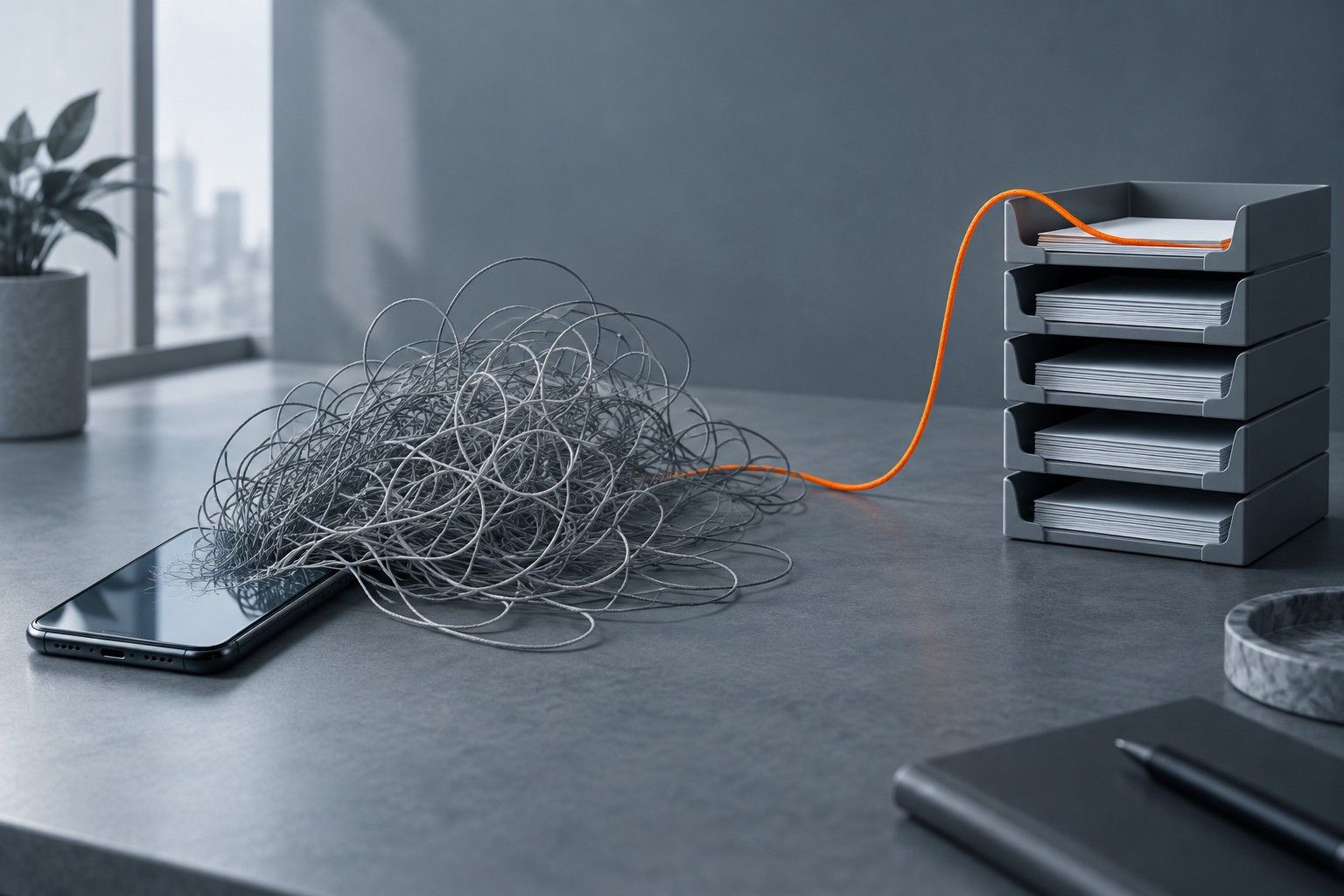
Most contractor marketing has exactly two settings: "never heard of you" and "call now." An ad, a website, a phone number. Nothing in between. But your customer lives in between. Research shows most homeowners spend a month or more deciding who to hire. If you have nothing speaking to them during that month, the contractor who does gets the job.
⚡ QUICK SUMMARY
65% of homeowners expect to stay in the research phase for a month or longer before hiring (Modernize, 2026). Big home service jobs average a sales cycle of around 60 days (WebFX, 2026). The middle of that journey is where deals are won, and most contractors have nothing there. A follow-up system fills the middle, and it can shorten the cycle itself by helping buyers do their due diligence faster.
How Long Is the Gap Between First Click and Phone Call?
Longer than almost any contractor believes. A January 2026 Modernize survey found 65% of homeowners expect to remain in the research phase for one month or longer before hiring, citing pricing, timing, and economic uncertainty. WebFX's 2026 home services benchmarks put the average sales cycle at roughly 60 days: emergency jobs close same-day, but installs and renovations stretch for weeks.
This is not new behavior. Back in 2009, a Google/OTX study of the home improvement purchase funnel measured an average of 39 days spent researching before a decision. Buyers have been living in the middle for a long time. What is new is how much comparing they can do from a phone before you ever know they exist.
1 month+
How long 65% of homeowners expect to research before hiring a pro
Source: Modernize homeowner survey, January 2026
What Happens in the Middle Right Now?
For most contractors: nothing. Here is the typical setup.
Related: ChatGPT Just Got Access to 330 Million Yelp Reviews. Here's What That Means for Your Business.
| 📣 The front Ads, a Google profile, maybe some SEO. Built to get a stranger's first click. |
📞 The end A phone number and an estimate form. Built for the person ready to buy today. |
| 🕳️ The middle Thirty to sixty days of comparing, budgeting, and doubting. For most contractors: dead air. |
🏆 The winner Whoever is still talking to the buyer when they finally decide. Usually not the first click. |
We wrote about the front door problem in 97% of your website visitors leave without calling. This post is about what happens after you catch one, because catching them is only half the game.
Why Does the Middle Decide Who Wins?
Because the buyer is making their decision during that month, not at the end of it. Every question they Google, every review they read, every price they compare is a step toward a conclusion. If your competitors are silent too, the job goes to whoever happens to be visible on decision day. If even one contractor is showing up in the buyer's inbox each week with useful answers, that contractor is running the whole race while everyone else waits at the finish line.
And silence has a cost even at the end. A Harvard Business Review audit of 2,241 companies (2011) found the average business took 42 hours to respond to a brand-new lead, and 23% never responded at all. The middle is not just unattended. Often the front desk is too. That is the silent killer we covered here.
How Do You Build the Middle?
The middle is a follow-up system, and the engine of it is email. It is the same machine we broke down in our guide to email marketing for small business: capture the lead early with something free, then send helpful email on a steady schedule for the whole month or two the buyer needs.
Helpful is the key word. Not "just checking in." Answer the exact questions a buyer researches during their due diligence: what jobs like theirs really cost, what a good estimate includes, what shortcuts to watch out for, what happens on install day. You are not pestering them. You are doing their homework with them.
💡 Pro Tip
Write down the ten questions every customer asks before they sign. That is your follow-up sequence. One question, one email, in plain language. A buyer who gets those ten answers from you will struggle to hire anyone else.
Can You Shorten the Buying Cycle?
Yes, and this is the part almost nobody talks about. That month of research exists because the buyer needs to see, understand, and believe certain things before they can commit. Left alone, they gather those pieces slowly and randomly. A good follow-up system hands them the pieces in order.
You help them do their due diligence faster. You help them see what they needed to see and believe what they needed to believe sooner than they would have gotten there on their own. You have taken time out of the equation, and you close more deals because of it. Speed matters at the start too: the MIT/InsideSales lead response study (Oldroyd, 2007) found that calling a new lead within 5 minutes instead of 30 makes you 21 times more likely to qualify them and 100 times more likely to reach them at all.
The contractor who educates the buyer controls the timeline. Everyone else is waiting on it.
One more benefit: a buyer who spent a month reading your answers shows up pre-sold. Fewer price battles, fewer tire kickers. That is the difference we explained in You Don't Need More Leads. You Need Better Leads.
The Bottom Line
Your market is not made of people ready to call today. It is mostly people who will be ready in one to three months. A front end that captures them and a middle that talks to them the whole way turns a trickle of lucky calls into a system that produces customers on a schedule. SpeedMobi has been building exactly that for home service companies since 2013, more than 5,000 of them. The middle is not optional anymore. It is where the job is won.
| Find Out Where Your Leads Are Leaking We will show you what happens to a lead after the first click on your business, and what a real middle would look like for your company.
|
About the author: Keith Carpenter is the founder of SpeedMobi, a done-for-you digital marketing company serving home service contractors since 2013. His team has built marketing systems for more than 5,000 businesses across 87+ trades.
Written for contractors, not marketers. What is working in local search and AI right now, in five minutes. No fluff, no spam, unsubscribe anytime.
Connects to QuickBooks Online in one click. Your competitors ask 100% of customers for reviews automatically. Now you can too.
See How It WorksTake the free assessment and get a full report on where your marketing stands and what to fix first.
Start My Free Assessment