⚡ QUICK SUMMARY
A CRM is a system that makes the daily stuff in your business happen without you doing it all yourself. Messages go out. Customers get notified. Follow-ups happen on time. It gives your customers a better experience, makes your life easier, and keeps your team on track.
If you run a service business, you already have a system. It might be sticky notes. It might be text messages. It might just be your memory. But it is a system. The problem is - it breaks. A lot.
A CRM fixes that. And once you see how it works, you will wonder how you ever ran your business without one.
What Does CRM Even Mean?
CRM stands for Customer Relationship Management. That sounds fancy. It is not.
Here is what it really means. Every day in your business, there are things that have to happen:
- Messages that need to go out
- Jobs that get completed
- People that need to be notified
- Follow-ups that cannot be forgotten
Right now, a person has to remember all of that. That person has to not only remember it - they have to actually do it. Every day. On time. Without dropping the ball.
Here is the truth: people forget. People get busy. People get sick. And when that happens, your customers have a bad experience.
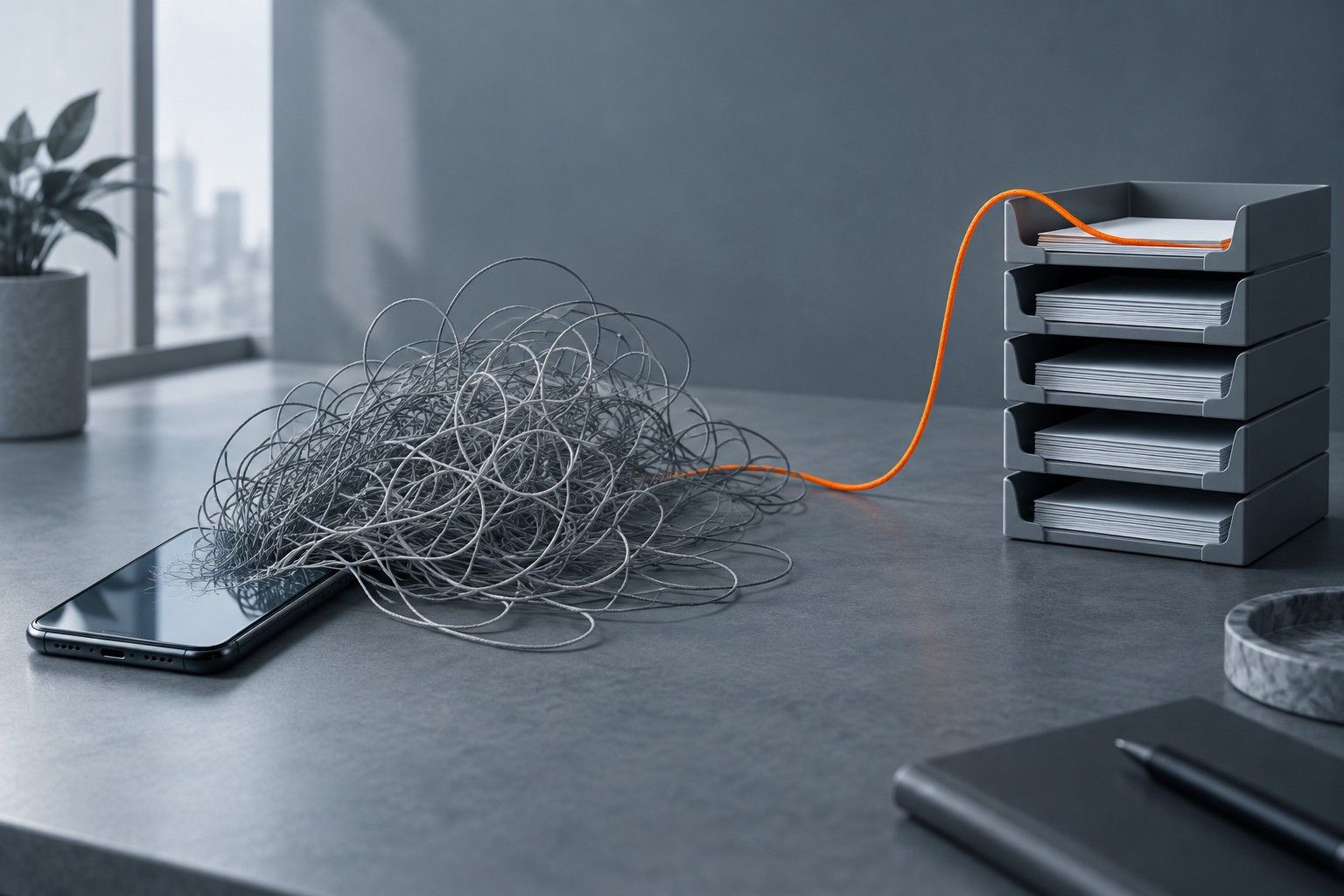
A CRM takes all of those daily tasks and puts them into a system. The system remembers. The system follows up. The system sends the messages. You just keep running your business.
How a CRM Works in Plain English
Think of your business like a machine. Every day, things happen in a pattern. A lead calls in. A job gets booked. Work gets done. The invoice goes out. A review request goes out. Pretty standard stuff.
Because everything is pretty predictable, we can build systems that make all of it happen automatically. We create levers that get pushed and pulled during the day. When something happens in the business, the system reacts.
💡 Real Example
A job is done and the work is complete. Without a CRM, someone has to remember to send the invoice, ask for a review, update the job board, and notify the next crew. That is ten different things. With a CRM, all ten happen the second you mark the job complete. One click. Done.
What Happens When You Do Not Have a CRM
You lose money. It is that simple.
| WITHOUT A CRM 30% of leads lost to slow or missed follow-up |
WITH A CRM 90%+ of leads get contacted within five minutes |
The average contractor loses nearly one in three leads because nobody followed up fast enough. The customer called. Nobody answered. By the time you called back, they already booked someone else.
That is not a skill problem. That is a systems problem.
What a CRM Actually Does for You Every Day
| 📲 Answers Missed Calls You miss a call - the system sends a text right away. "Hey, sorry I missed you. How can I help?" That saves the lead. |
🔁 Follows Up Automatically Day one, day three, day seven, day fourteen. The system sends emails and texts until the lead responds. No human effort needed. |
| 📅 Books Appointments Customers book online, pick a time that works, and get a confirmation. You wake up to a full schedule. |
⭐ Asks for Reviews Job done? The system sends a review request. No awkward asking. Your Google reviews grow every week. |
Who Benefits From a CRM?
Everyone. And I mean everyone.
| 👤 The Customer They get faster responses, clear updates, and a smooth experience. They feel taken care of. |
👷 The Business Owner You stop chasing tasks. The system handles the daily grind. You focus on growing the business. |
👥 The Team They know what to do and when to do it. Less confusion. Less stress. Better work. |
At the end of the day, a CRM gives your customers a better experience, makes your life easier, and makes your employees happier. Everyone wins.
How to Know If You Need a CRM
If any of these sound like you, you need one:
1 You run your business from your text messages
Leads buried in threads. Quotes forgotten. No way to track what happened.
2 You miss calls when you are on a job
You are on a roof or under a sink. The phone rings. You miss it. That customer is gone.
3 You do not follow up with leads regularly
Eighty percent of sales happen after the fifth contact. Most contractors stop after one.
4 You cannot tell how many leads you got this month
If you do not know your numbers, you cannot grow. A CRM tracks everything for you.
Getting Started Is Easier Than You Think
You do not need to be a tech person. You do not need to build anything yourself. The right CRM system plugs into your business and starts working on day one.
The key is to pick a system that does it all - lead tracking, website integration, follow-up automation, review requests, scheduling, and reporting. All in one place. Not five different apps that do not talk to each other.
💡 Pro Tip
The best CRM for a contractor is one that works without you having to think about it. If you have to log in every day and push buttons, it is not automated enough. Look for a system where the automation runs in the background while you focus on your trade.
The Bottom Line
A CRM is not fancy software. It is a system that makes sure the daily stuff in your business actually gets done. Messages go out. Follow-ups happen. Customers get a great experience. And you stop losing money to dropped balls.
If you are running your business on paper, text messages, and memory - you are working harder than you need to. A CRM is the fix.
| Find Out Where Your Leads Are Leaking See how many leads slip through the cracks - and how a CRM can catch them.
|
Written for contractors, not marketers. What is working in local search and AI right now, in five minutes. No fluff, no spam, unsubscribe anytime.
Connects to QuickBooks Online in one click. Your competitors ask 100% of customers for reviews automatically. Now you can too.
See How It WorksTake the free assessment and get a full report on where your marketing stands and what to fix first.
Start My Free Assessment